


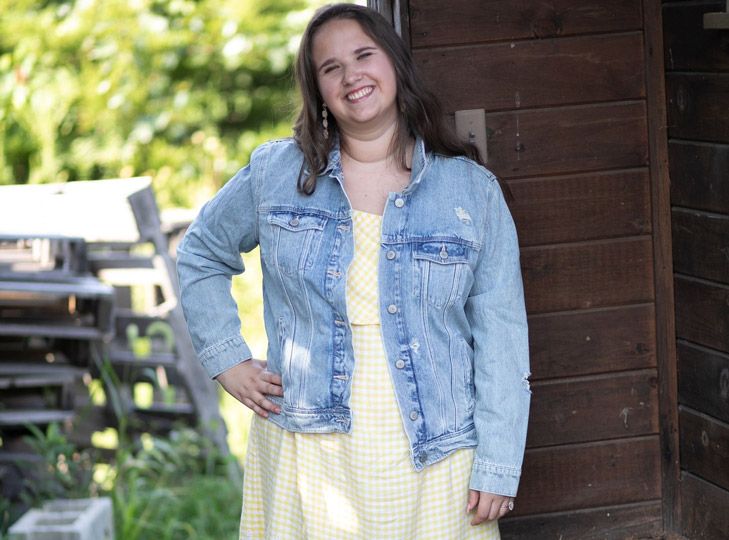
There are five small drawings hanging in John and Ruth Maitz’s home in Holly Springs, North Carolina.
There’s an Eiffel Tower, an octopus, a rose, a fish and a starburst, all created years ago by their late granddaughter, Ava Grace Maitz. Ava was perhaps 12 or 13 when she drew them at her home in Pennsylvania, and asked her grandmother to choose whichever pieces she wanted and take them home.
Today, they are more than artwork. They’re reminders of a young woman who seemed always to be creating something.
“She loved everything art,” recalls her father, Jon Maitz.
Ava drew and painted. She took art classes. She made intricate designs with tiny beads and wrote and illustrated a short story about the adventures of sea turtles. During childhood visits with her grandparents, she would paint ceramics and bring home her creations. Jon remembers taking her to art programs when she was young, including visits to the former Banana Factory, and to a pottery festival near Emmaus where she tried her hand at clay.
Art was simply part of who she was.
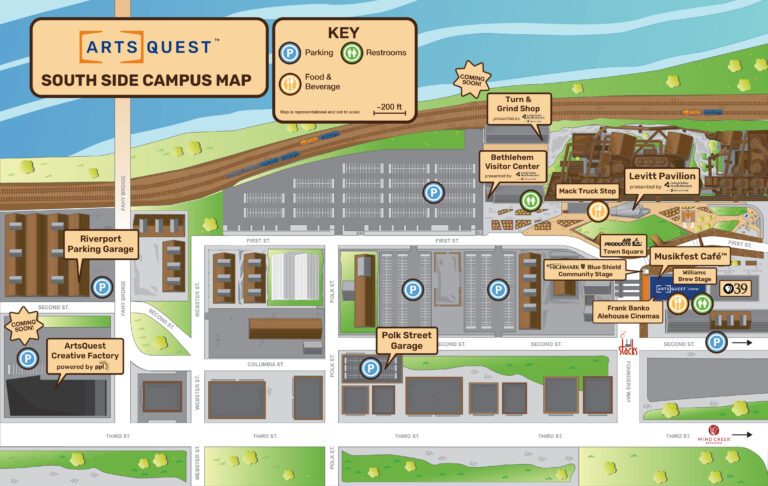
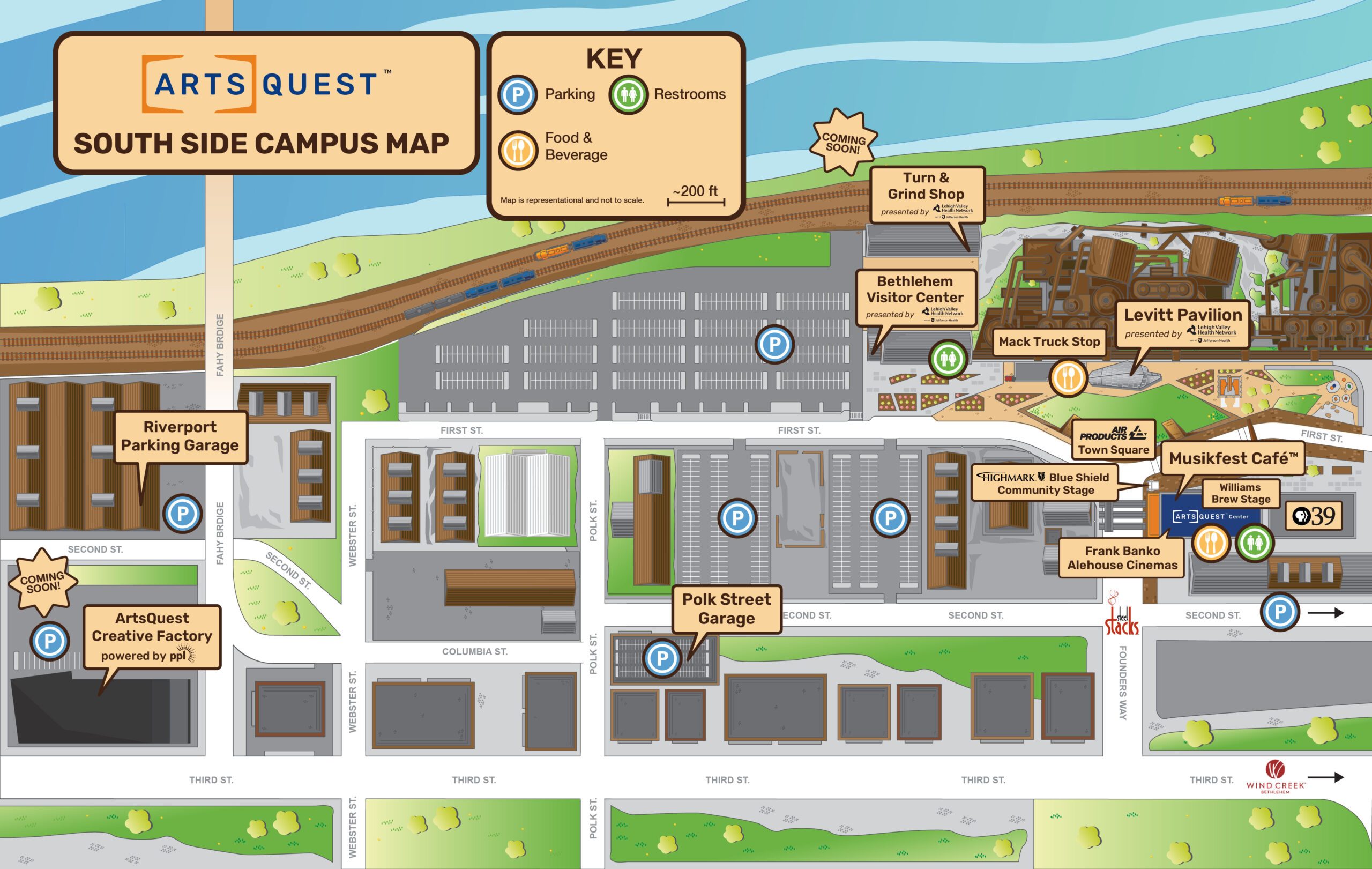
Soon, Ava’s name—and her creative spirit—will become part of a new chapter in ArtsQuest’s own history through the Ava Grace Maitz Ceramics Studio at the ArtsQuest Creative Factory powered by PPL.
A Life Filled With Creativity
Born in Sellersville and raised in Coopersburg, Ava graduated from Southern Lehigh High School in 2019. She was attending Bloomsburg University, where she was in her final year studying business and personal finance in 2024, when she died in a car accident at 23.
But describing Ava only through the milestones of her life would miss much of what made her memorable to the people who loved her.
She was an extraordinary reader. Ruth remembers rarely seeing her granddaughter without a book in her hand.
She loved animals and worried about the impact plastic waste could have on them. John remembers Ava insisting that he and Ruth cut plastic bags into small pieces before throwing them away so an animal couldn’t become tangled in them or try to eat them.
She loved the beach, especially visiting Myrtle Beach by her grandparents. Her favorite color was blue. She loved SpongeBob, Starbucks and getting her nails done, and enjoyed working at the Giant Food Store in Coopersburg for four years.
“If she had her nails done and a Starbucks coffee in her hand, she was a happy camper,” Ruth says.
And she loved her family.
During the COVID-19 pandemic, when Bloomsburg moved classes online, Ava spent nearly a year living with John and Ruth—her “Ma” and “Pappy” in North Carolina. As she grew older, she and her grandfather became particularly close, talking four or five times a week—and sometimes every day.
Even the way they ended those conversations became their own tradition.
Whenever John would say goodbye, Ava would object.
“‘Oh no, Pappy, that’s too final,’” John remembers.
So they stopped saying goodbye. Instead, they ended their calls with “toodle-oo,” eventually shortened simply to “toodles.”
That same closeness extended to her younger brother, Jake. Like many siblings, Jon says, they could “fight like cats and dogs.” But if Jake needed something, Ava was the first person there to help.
That instinct—to show up for someone else—may be what her family remembers most.
“She had a very big heart,” Ruth says. “She was very kind. She didn’t really think of gratification to herself. She was always willing to help somebody else.”
In Ava’s Memory
After Ava’s passing, Jon wasn’t thinking about recognition or putting the family name on a building.
He was thinking about his daughter.
As the family considered where memorial contributions might go, they kept coming back to the things Ava loved. Art was among them.
Jon reached out to ArtsQuest President and CEO Kassie Hilgert with a simple question: Was there something ArtsQuest needed that could help give young people opportunities to experience the arts?
That conversation eventually led to the Creative Factory powered by PPL and a new ceramics studio bearing Ava’s name.
For Jon, the decision wasn’t about creating a monument. It was about creating an opportunity.
He hopes the children, students and artists who enter the studio will find some of the same joy in creating that Ava did.
“Hopefully the kids love art as much as her,” he says.
The connection to ceramics felt especially appropriate. Ava had experienced pottery and ceramics throughout her life—from visiting pottery festivals with her father to painting and firing ceramic pieces during trips to see her grandparents.
The studio also creates a connection between Ava’s childhood experiences with art and a new generation of people who will have those experiences at ArtsQuest.
A Studio that Inspires the Next Generation
Inside the Creative Factory, the Ava Grace Maitz Ceramics Studio will not be a static memorial.
It will get messy.
There will be clay on tables and hands. Students will sit down at pottery wheels, perhaps for the first time. Beginners will discover what they can make. More experienced artists will develop their skills. Pieces will fail. Others will surprise their creators. And eventually, finished work will leave the studio and make its way into homes, onto shelves and perhaps even onto grandparents’ walls.
That’s exactly the point.
Ava’s family hopes the studio will be a place where people are encouraged to experiment, learn and create—and where access to art allows someone to discover an interest they may carry with them for the rest of their life.
Years from now, many of the people who create there may never have known Ava.
But they will know her name.
And perhaps the spirit of the space will tell them something about her: that she was creative, curious and deeply kind; that she believed in helping others; and that art was something that brought joy to her life.
Asked how Ava herself might react to having a ceramics studio named in her honor, her father and grandparents laugh a little.
Jon suspects she would think all the attention was unnecessary.
John agrees that recognition for its own sake probably wouldn’t have meant much to his granddaughter.
It is a response that feels fitting for the young woman they describe: humble, funny, unassuming and much more interested in living life—and in other people—than having attention focused on herself.
Just like Ava found joy in making art, the ceramics studio that bears her name will be a place for students to discover that making something with their own hands can bring confidence, connection or joy.